
A useful grooming plan begins with comfort and the right equipment, not finishing every job in one sitting.
Separate preparation from handling
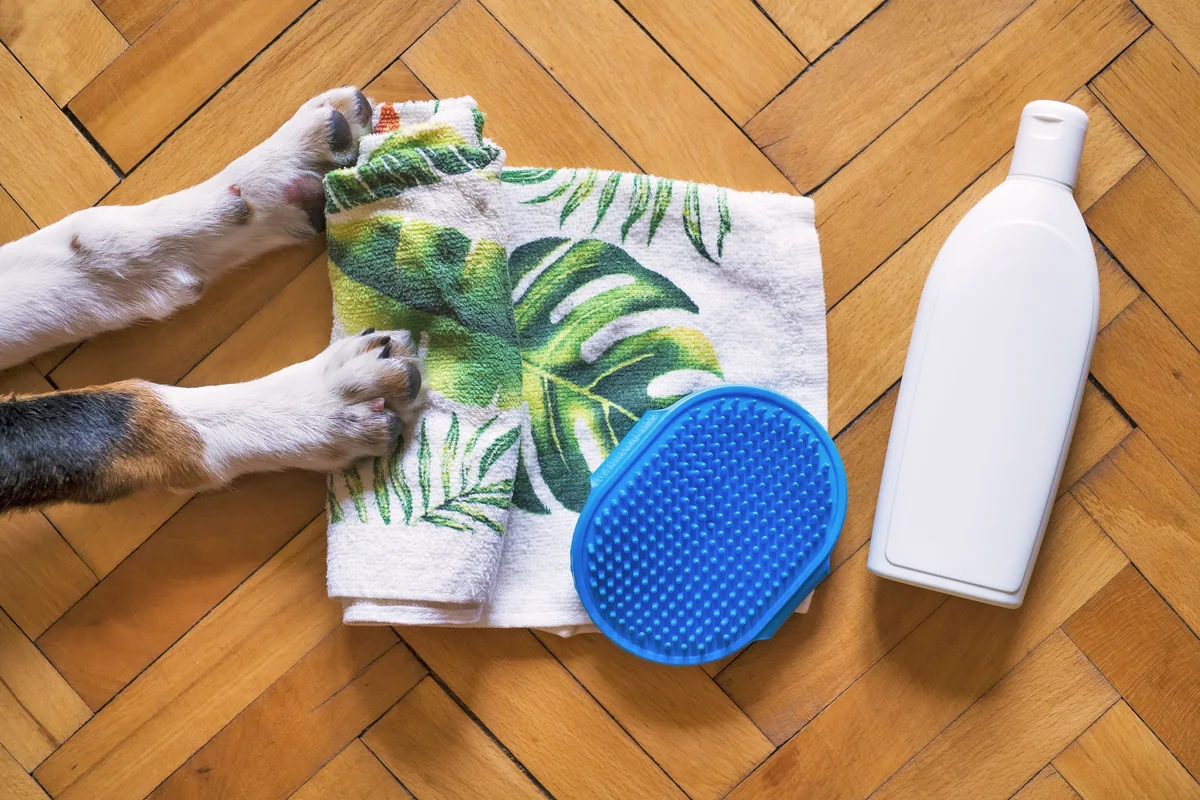
Before bringing your dog over, clear a stable space and put everything within reach. A towel slipping on a smooth table or a brush you cannot find makes an ordinary task harder. Ask a vet or reputable groomer which tools suit your dog’s coat; buying the most elaborate kit is not the same as choosing a suitable one. For necessary care that your dog cannot comfortably tolerate, arrange professional help.
Keep the first step small
Introduce gentle handling gradually, with rewards and pauses. Let the dog move away rather than holding them down to complete a checklist. Stop if they appear distressed or uncomfortable. The notebook is there to help you remember what was manageable; it is not a target your dog has to meet.
- Prepare one appropriate tool and a comfortable place.
- Choose one small part of the task to discuss or practise.
- Record what you did and how the dog responded.
- Put the next step on a separate day if more preparation is needed.
Write a useful handover
An original example entry might read: “Tuesday: brought the brush to the mat; paused when Milo moved away. Ask the groomer about the right brush before continuing.” That is more useful to a second caregiver than “grooming failed”. Add where supplies live and who is responsible for booking appointments. Keep these practical notes together with the weekly care list.
Leave difficult coat and skin problems to professionals
Grooming can reveal changes that deserve attention. Pain, skin changes or difficult matting need appropriate advice rather than a more determined home session. Do not cut close to skin or put products in ears because an online checklist suggests it. Bring observations and questions to your vet or groomer.
One thing to try today
Add the correct tool, a comfortable location and one question for your groomer to your care checklist.
Open the matching free tool ↗Sources & further reading
These resources inform the care principles. Household planning examples are our own. Source check: 4 October 2026.
This article has not had an individual veterinary review. For health concerns or behaviour that risks harm, seek qualified help. Our editorial policy.